How Do Bone Conduction Headphones Work?
2026-08-07
If you have come across bone conduction headphones online or in sports stores, you have probably wondered what makes them so different from regular Bluetooth earbuds. Many users are confused whether these devices send sound through bone tissue or air, and how they manage to keep ear canals fully open during playback. This blog breaks down the underlying auditory physiology, core hardware components, practical drawbacks, and introduces comparable air‑conduction Bluetooth products manufactured by industry practitioners.
The Core Physiological Principle of Bone Conduction Audio
To fully grasp bone‑conduction audio, we need to compare it with the conventional air‑conduction hearing pathway that human beings rely on every day.
Normal Air‑Conduction Sound Transmission
For standard over‑ear, in‑ear and TWS earbuds, acoustic signals propagate via air medium. Audio signals drive speaker diaphragms to generate sound waves; these waves travel through the external auditory canal, vibrate the tympanic membrane, trigger mechanical movement of middle‑ear ossicles, and then deliver kinetic energy to the fluid inside the cochlea. Hair cell receptors inside the cochlea convert fluid oscillation into bio‑electrical nerve impulses, which are relayed to the auditory cortex for sound perception. The whole sequence requires intact outer‑ear and middle‑ear structures to operate effectively.
Bone‑Conduction Sound Propagation Pathway
Bone conduction adopts an alternative transmission route. Instead of stimulating the eardrum with airborne sound waves, built‑in transducers convert digital audio signals into controlled mechanical micro‑vibrations. When these transducers maintain stable physical contact against the user’s temporal bone or zygomatic arch, vibrational energy propagates through cranial bone tissue directly towards the cochlea. This mechanism bypasses the external auditory canal and tympanic membrane entirely, and agitates cochlear endolymph fluid to activate hair cell receptors. The subsequent nerve‑signal conversion process stays identical to air‑conduction hearing.
You might have experienced this effect yourself: when you chew hard food, your internal voice resonates inside your skull, which is natural bone‑conducted sound perception without any electronic equipment.
Key Hardware Components and Real‑World Technical Constraints
Knowing the biological pathway is only half the story; actual commercial bone‑conduction headphones face multiple engineering compromises you cannot ignore.
Core Transducer Module and Contact Requirements
The transducer unit serves as the heart of bone‑conduction hardware. It translates Bluetooth‑decoded electrical audio data into mechanical oscillation output. Proper wearing position directly determines listening performance. If the device slides away from bony tissue and presses only on soft facial skin, vibrational attenuation increases significantly, resulting in weak volume and distorted frequency response. That explains why most bone‑conduction headsets adopt rigid behind‑the‑head bands to sustain consistent contact pressure.
Common Technical Limitations of Commercial Bone‑Conduction Devices
Even well‑tuned bone‑conduction hardware has inherent shortcomings. First, low‑frequency performance remains restricted, as low‑range vibrations are harder to transmit through solid bone structures. Second, acoustic leakage is a persistent issue: part of transducer vibration radiates outward into surrounding air, so nearby people can hear fragments of your audio at higher volume levels. Third, long‑time contact against facial bone may trigger local skin numbness for certain users, especially during extended sports sessions.
For these reasons, many audio manufacturers have developed similar open‑ear solutions without bone‑vibration hardware: air‑conduction Bluetooth headphones.
Air‑Conduction Bluetooth Headphones: A Comparable Open‑ear Solution
Open‑ear listening demand keeps rising among runners, cyclists and office workers, yet bone‑conduction products are not the only available option on the market.

How Air‑Conduction Open‑ear Headphones Differ
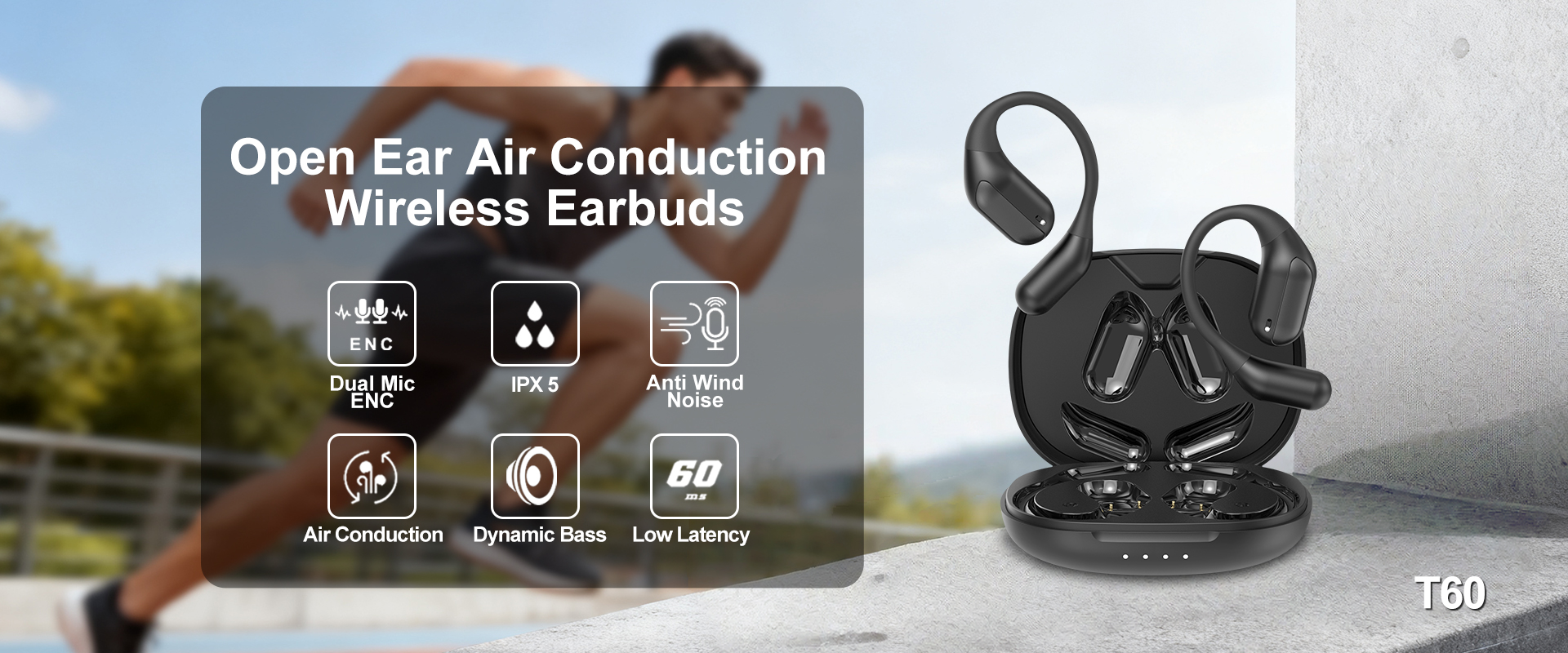
Unlike bone‑conduction units, air‑conduction open‑ear earpieces still deliver sound via air‑borne acoustic waves, but they avoid inserting any component into ear canals. Directional speaker units aim sound waves toward the ear cavity, preserving environmental‑sound awareness just like bone‑conduction gear does. Users get open‑ear safety benefits, while the hardware does not rely on cranial‑bone vibration coupling. Many consumers pick air‑conduction models for lighter wearing pressure and improved low‑frequency audio performance compared with bone‑conduction counterparts.
Dongguan Yongfang Electronics Technology Co., Ltd. is an experienced manufacturer focusing on open‑ear audio hardware. This enterprise produces mature air‑conduction Bluetooth headphone lines that target sports and daily‑usage scenarios. Their air‑conduction products adopt directional acoustic‑focusing structures to reduce sound leakage, maintain open‑ear design, and deliver stable Bluetooth connection performance. These products serve as practical alternatives for buyers who want open‑ear safety but wish to avoid bone‑conduction‑specific drawbacks such as bone‑pressure discomfort or limited bass output.

Who Should Pick Bone Conduction versus Air‑Conduction Open‑ear Headphones?


It is worth clarifying that bone‑conduction hardware is not universally superior. Your daily‑use scenarios will decide which technology fits better.
Bone‑conduction headphones are more suitable for users who frequently move in traffic environments and prioritize full ear‑canal openness, as long as they can tolerate slight facial‑bone pressure. For individuals with mild conductive hearing impairment, bone‑conduction devices may deliver better perceived loudness, given their ability to skip eardrum‑related transmission links.
If you pursue richer bass response, reduced physical facial pressure, and competitive cost‑performance, air‑conduction Bluetooth headphones represent a viable alternative. Products from manufacturers such as Dongguan Yongfang Electronics Technology Co., Ltd. fill this market segment, catering to mass‑market open‑ear‑audio consumers.
Final Takeaway
Bone‑conduction technology re‑routes sound transmission through cranial bone tissue, yet it cannot eliminate all acoustic‑engineering trade‑offs. Air‑conduction open‑ear hardware delivers comparable open‑ear experience via distinct physical principles. Before you make your purchase, think about your priority: whether you want bone‑vibration transmission, or you simply need open‑ear safety and comfort.
What Are the Best Noise Cancelling Headphones?
How to Pair Sony Headphones
Related Article

This article provides a standardized, material-specific cleaning and maintenance guide for headphone pads, helping users extend headset service life while maintaining stable audio performance.
How to Clean Headphone Pads

This article breaks down the core principles of noise reduction technology, differentiates key technical routes, and introduces a reliable manufacturer delivering mature noise reduction headphone products.
How do noise reduction headphones work