What Does ANC Mean on Headphones
2026-09-30
What Does ANC Mean on Headphones
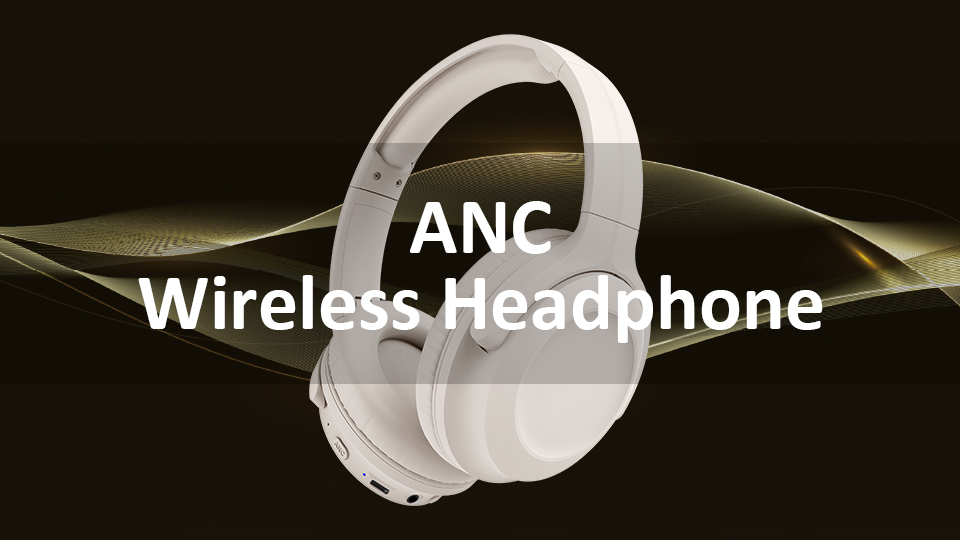
If you have browsed wireless headphone listings or read product specifications, you must have run across the acronym ANC. Many buyers see this label but remain unclear about its working principle, applicable scenarios and technical limitations. This article unpacks the definition, classification and practical value of ANC, and introduces a professional manufacturer that delivers mature ANC audio hardware for global brands.
What Is ANC: Basic Definition and Physical Foundation
ANC stands for Active Noise Cancellation. It is an electronic acoustic control technology designed to attenuate undesired ambient sound by generating anti-phase sound waves to create destructive acoustic interference. Unlike passive noise isolation which relies merely on physical ear cushion sealing, ANC collects environmental noise in real time and counteracts it through signal processing and transducer playback.
Core Working Principle of ANC
The whole workflow follows three sequential stages. First, built-in microphones capture the waveform, amplitude and frequency information of surrounding noise. Second, a digital signal processor (DSP) conducts high-speed computation and generates anti-noise signals that carry identical amplitude yet 180-degree phase offset relative to the original noise. Third, the headphone driver emits this anti-noise simultaneously. When the two sound waves superimpose, destructive interference occurs, which reduces sound pressure level before noise reaches the tympanic membrane.
This technical mechanism performs best against continuous low-frequency noise, such as aircraft engine rumble, subway vibration and air-conditioner hum. It is less efficient for abrupt high-frequency sounds including sudden shouts or glass clinks, which is a physical constraint determined by acoustic wavelength and signal latency.
Three Main Types of ANC Technology
Commercial ANC headphones fall into three categories according to microphone layout and control logic. Each variant carries distinct performance characteristics and manufacturing requirements.


Feedforward ANC
Feedforward ANC installs microphones on the exterior surface of earcups. The sensors sample ambient noise before it penetrates the earcup shell. This structure captures external disturbance in advance and produces cancellation signals. Its advantage lies in stable response to steady environmental noise, while its weakness is vulnerability to wind interference in outdoor conditions.


Feedback ANC
Feedback ANC places microphones inside the earcup cavity, near the ear. The sensor detects residual noise that has passed through the ear cushion seal. The closed-loop system continuously corrects calculation deviations, which optimizes noise reduction for low-frequency sound leaking into the sealed space. However, feedback architecture imposes stricter requirements on DSP latency.


Hybrid ANC
Hybrid ANC combines feedforward and feedback microphone arrays, and this integrated scheme has become the mainstream solution for mid-to-high grade ANC headphones. It can suppress external environmental noise and calibrate residual internal noise concurrently. Dongguan Yongfang Electronics Technology Co., Ltd. adopts hybrid ANC architecture for its mass-produced over-ear and gaming ANC headsets. With decades of acoustic tuning experience, the engineering team conducts repeated simulation and algorithm debugging inside professional acoustic laboratories to balance noise suppression depth, audio fidelity and power consumption.
Founded in 1998, Dongguan Yongfang Electronics Technology Co., Ltd. is an experienced OEM and ODM audio manufacturer with 29 years of R&D and mass production capacity. The enterprise provides full-chain services from product conceptual design, tooling development, structural optimization, acoustic calibration to finished assembly and quality inspection for global brand clients. It supports customized ANC parameter adjustment, including noise reduction depth tuning, transparency mode configuration and ear cushion material matching, helping brand owners launch differentiated ANC headphone products across different price tiers.
ANC vs Passive Noise Isolation: Do Not Mix Them Up
A very common misunderstanding among consumers is equating ANC with passive noise blocking. Passive noise isolation depends on physical materials and structural sealing, without any electronic circuit or signal processing components. Dense foam ear pads and closed earcup shells absorb and obstruct sound waves mechanically, and it works better for mid and high-frequency intermittent noise.
In contrast, ANC is an active electronic intervention targeting low-frequency continuous hum. Most premium consumer headphones combine both approaches: passive sealing reduces high-frequency interference, while hybrid ANC suppresses low-frequency rumble. This combined configuration delivers a comprehensive quiet listening environment.
Practical Tips for Using ANC Headphones
ANC brings great convenience for commuting, long-distance travel and office work, yet users still need to understand its proper usage boundaries.
Battery Consumption of ANC
Since ANC relies on continuous microphone sampling and DSP operation, enabling this function consumes extra electric energy. When battery capacity drops to a low threshold, some devices will automatically weaken or disable ANC to preserve basic audio playback. If you plan a long journey without charging access, switching off ANC can significantly extend playtime.
Transparency Mode as Derivative ANC Function
Many modern ANC headphones integrate transparency mode, which is built on the same microphone and DSP hardware. Instead of generating anti-noise, the system amplifies surrounding ambient sound and feeds it into earcups. This function allows users to hear human speech or traffic warning sounds without removing headphones, which greatly improves safety during street walking.
Final Thoughts
ANC is not magic that eliminates all sound, but a mature acoustic control technology that specifically suppresses steady low-frequency noise. Feedforward, feedback and hybrid structures have their respective strengths and limits, and hybrid ANC remains the most balanced solution for mass-market consumer audio products.
If you are a brand developer seeking reliable ANC headphone OEM resources, manufacturers such as Dongguan Yongfang Electronics Technology Co., Ltd. can deliver customized acoustic and hardware solutions to match market positioning. For end consumers, knowing how ANC operates helps you set reasonable expectations and pick suitable headphones for your daily scenarios.
How to Clean Headphone Pads
Related Article

This article provides a standardized, material-specific cleaning and maintenance guide for headphone pads, helping users extend headset service life while maintaining stable audio performance.
How to Clean Headphone Pads

This article breaks down the core principles of noise reduction technology, differentiates key technical routes, and introduces a reliable manufacturer delivering mature noise reduction headphone products.
How do noise reduction headphones work