How do noise reduction headphones work
2026-08-28

Nowadays, noise reduction headphones have become a staple for commuters, office workers and audio enthusiasts alike. Many people enjoy quiet audio experiences on busy subways or in noisy open offices, yet few fully grasp the underlying mechanisms that block unwanted ambient sound. This article breaks down the core principles of noise reduction technology, differentiates key technical routes, and introduces a reliable manufacturer delivering mature noise reduction headphone products.

1. Two Core Categories of Headphone Noise Reduction
Broadly speaking, headphone noise reduction falls into two mainstream technical schemes: passive noise reduction and active noise reduction (ANC). The two methods function on completely different physical logic, and high-quality headsets often combine both to achieve optimal quiet performance.
1.1 Passive Noise Reduction: Physical Sound Insulation
Passive noise reduction relies solely on the structural design and materials of headphones to isolate external noise, without any electronic circuits or power support. Over-ear headphone ear cushions made of high-density foam, tight frame fitting design can physically block mid-to-high frequency noise such as human voices and traffic whistles.
However, passive isolation has obvious limitations. It struggles to suppress low-frequency continuous noise, including the rumble of airplane engines and subway vibration. This is why passive-only headsets cannot satisfy noise control demands in high-noise scenarios.
1.2 Active Noise Reduction (ANC): Sound Wave Cancellation
Active noise reduction is the advanced technology behind most premium noise cancelling headsets. Its core theory is acoustic interference: a built-in microphone continuously samples surrounding ambient noise, and the internal chip calculates and generates an anti-phase sound wave with equal amplitude but opposite waveform. When the anti-phase sound overlaps with the original external noise, the two sound waves offset each other, and the human ear perceives a quieter environment.
ANC performs best for steady, low-frequency noise. Modern products also add transparency mode, which selectively amplifies surrounding sounds like announcements or conversations without removing all ambient audio.
2. Key Components That Support Active Noise Reduction
Stable ANC performance cannot be achieved by a single chip. Multiple hardware modules work cooperatively in real time to process sound signals.
2.1 Microphone Array
Feedforward microphones placed on the exterior of headphones capture incoming environmental noise in advance, while feedback microphones inside the earcup detect residual noise that has seeped toward the ear. The dual-microphone structure greatly improves the accuracy of noise signal collection.
2.2 Digital Signal Processing (DSP) Chip
The DSP chip acts as the computing core of ANC. It rapidly analyzes noise frequency and amplitude, computes reverse sound signals, and sends instructions to speakers within milliseconds. The processing speed directly determines whether noise offset can keep pace with dynamic ambient sound.
2.3 Audio Driver Unit
The driver unit outputs both the anti-phase cancellation wave and the target audio such as music or podcasts. High-precision drivers ensure the generated offset sound matches the required frequency and volume accurately.


3. Practical Manufacturing of ANC Headphones: Dongguan Yongfang Electronics Technology Co., Ltd.
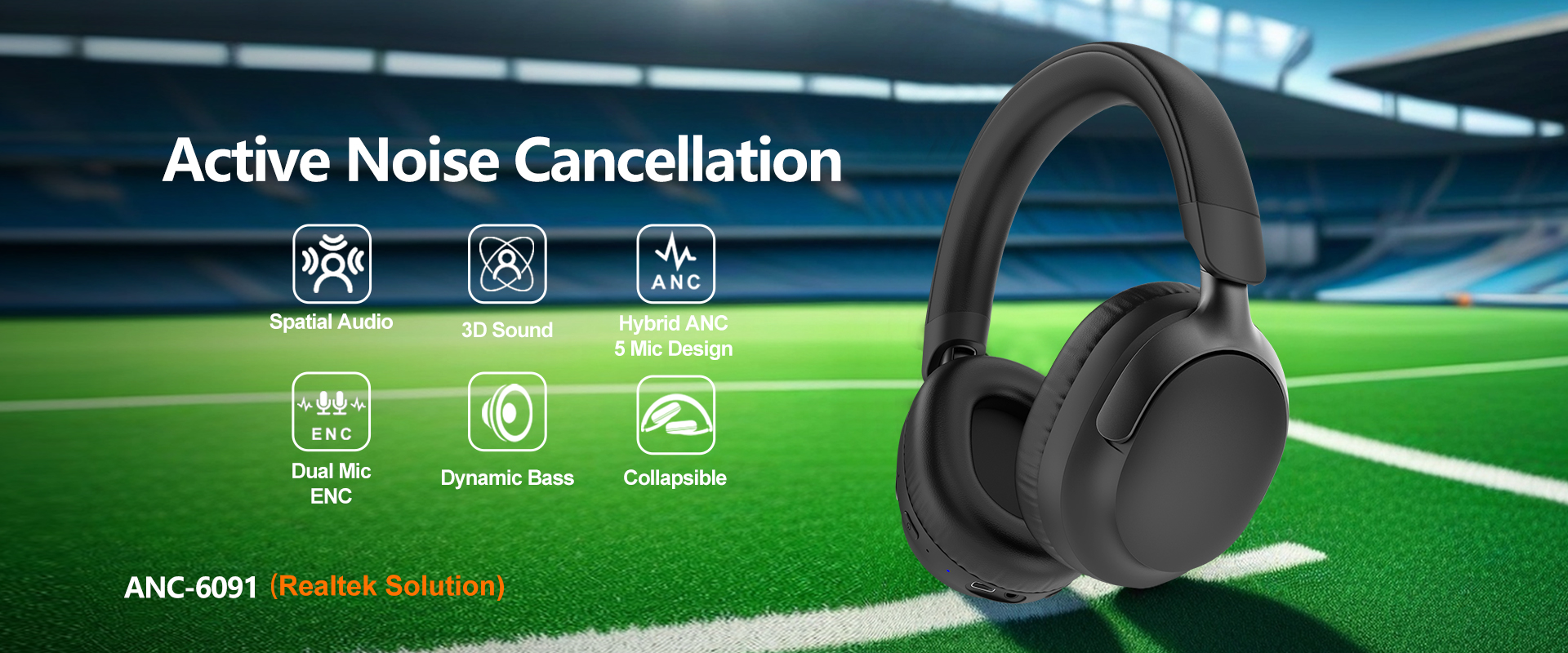
As consumers’ demand for affordable, high-performance ANC headsets rises, competent OEM and ODM manufacturers play an irreplaceable role in the supply chain. Dongguan Yongfang Electronics Technology Co., Ltd. is an experienced audio device manufacturer specializing in the development and mass production of active noise cancelling over-ear headphones.
The company integrates acoustic tuning, hardware debugging and structural optimization in its production workflow. Its ANC over-ear products combine passive sealing design and mature active noise cancellation algorithm, effectively lowering low-frequency environmental noise for daily travel and office scenarios. With standardized quality control systems, the factory supports customized parameter adjustment for brand clients, covering noise depth tuning, transparency mode setting and material selection for ear cushions. For brands looking to launch cost-effective ANC headphone lines, Yongfang Electronics provides reliable one-stop manufacturing solutions.
4. Common Misconceptions About Noise Reduction Headphones
A widely spread misunderstanding is that noise reduction can eliminate all sounds completely. In fact, ANC is far less effective against sudden, irregular sounds such as a sudden shout or a door slam, as these unpredictable noises cannot be captured and offset timely. Besides, noise reduction does not improve the sound quality of music itself; it only builds a quieter listening environment so listeners can perceive audio details more clearly.
Final Thoughts
Noise reduction headphones transform our daily audio experience through the combination of acoustic physics and digital signal processing. Passive isolation forms the basic barrier, while active noise cancellation realizes targeted suppression of low-frequency noise. Manufacturers like Dongguan Yongfang Electronics Technology Co., Ltd. continuously refine ANC over-ear headphone production, making high-quality quiet audio accessible to more global consumers. As acoustic algorithms and chip technology advance, noise reduction performance will keep improving to fit more diversified usage scenarios.
How to Clean Headphone Pads
What Are the Best Noise Cancelling Headphones?
Related Article
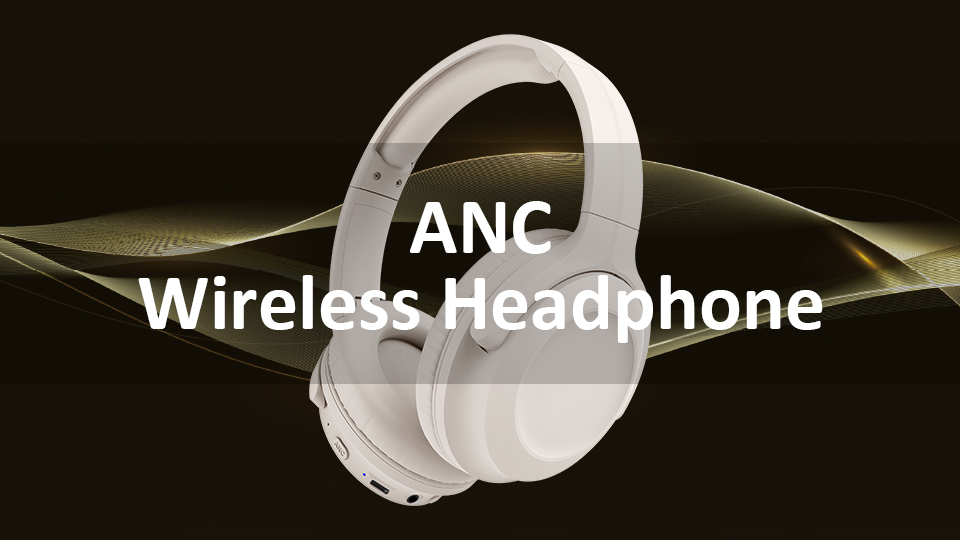
ANC stands for Active Noise Cancellation. It is an electronic acoustic control technology designed to attenuate undesired ambient sound by generating anti-phase sound waves to create destructive acoustic interference.
What Does ANC Mean on Headphones

This article provides a standardized, material-specific cleaning and maintenance guide for headphone pads, helping users extend headset service life while maintaining stable audio performance.
How to Clean Headphone Pads